
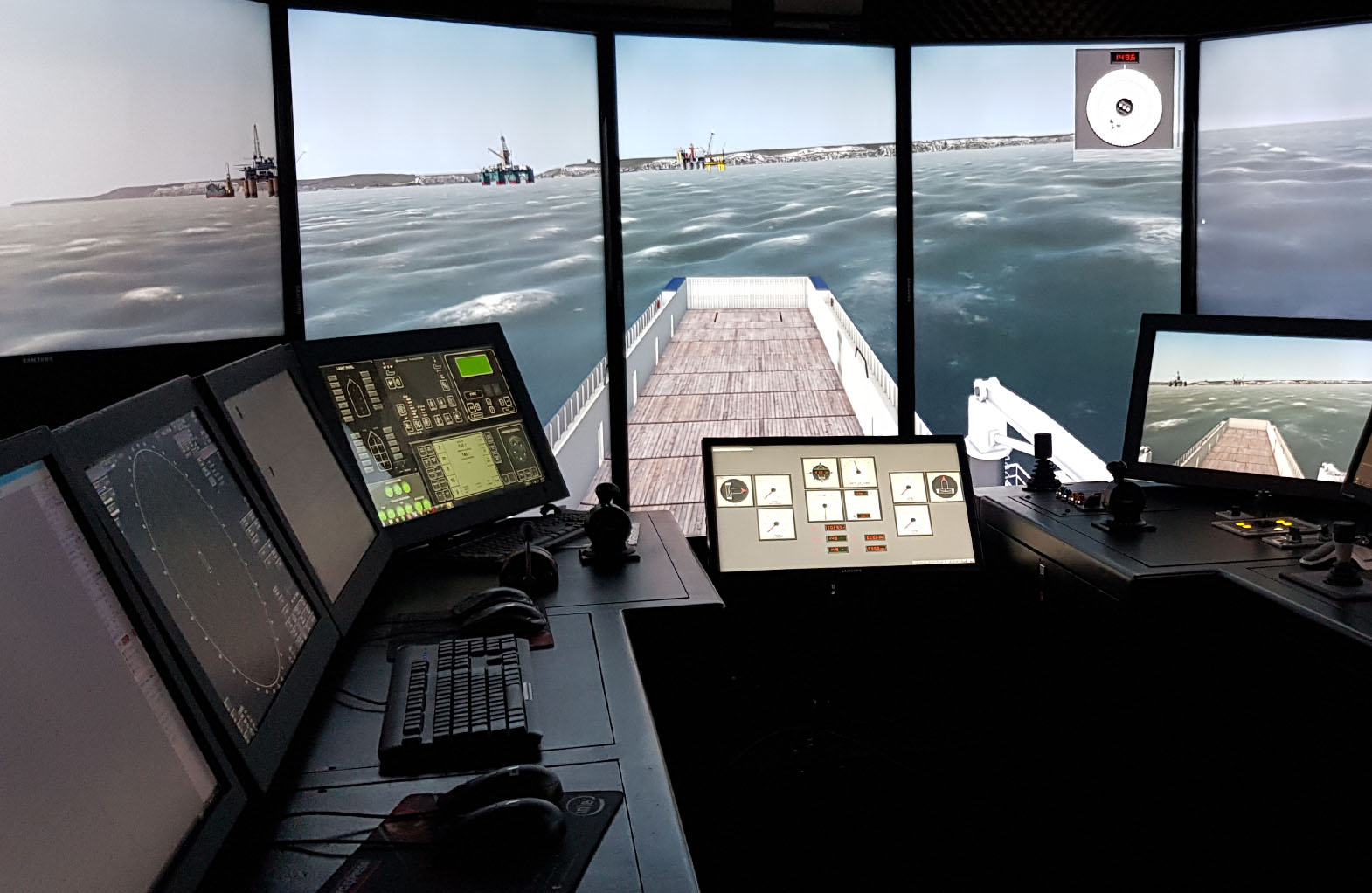
The NI (Annex F)
DP Revalidation Course
Instructor

The Nautical Institute
Annex F
DP Revalidation Course
February 2025 – Version 1
Disclaimer
While every effort has been made to ensure that all the information in this document is updated and correct, The Nautical Institute cannot be held responsible for any loss, financial or otherwise, direct or indirect, resulting from use of this information. Likewise, The Nautical Institute cannot be held responsible for any damage to property or personnel while following these guidelines. This information is produced in good faith, but The Nautical Institute cannot guarantee the accuracy and/or completeness of the information, which is produced for guidance purposes only.
© The Nautical Institute 2025
200B Lambeth Road, London, SE1 7JY United Kingdom Tel: +44 (0)20 7928 1351
Web: www.nautinst.org www.nialexisplatform.org
Document version control
1. Introduction
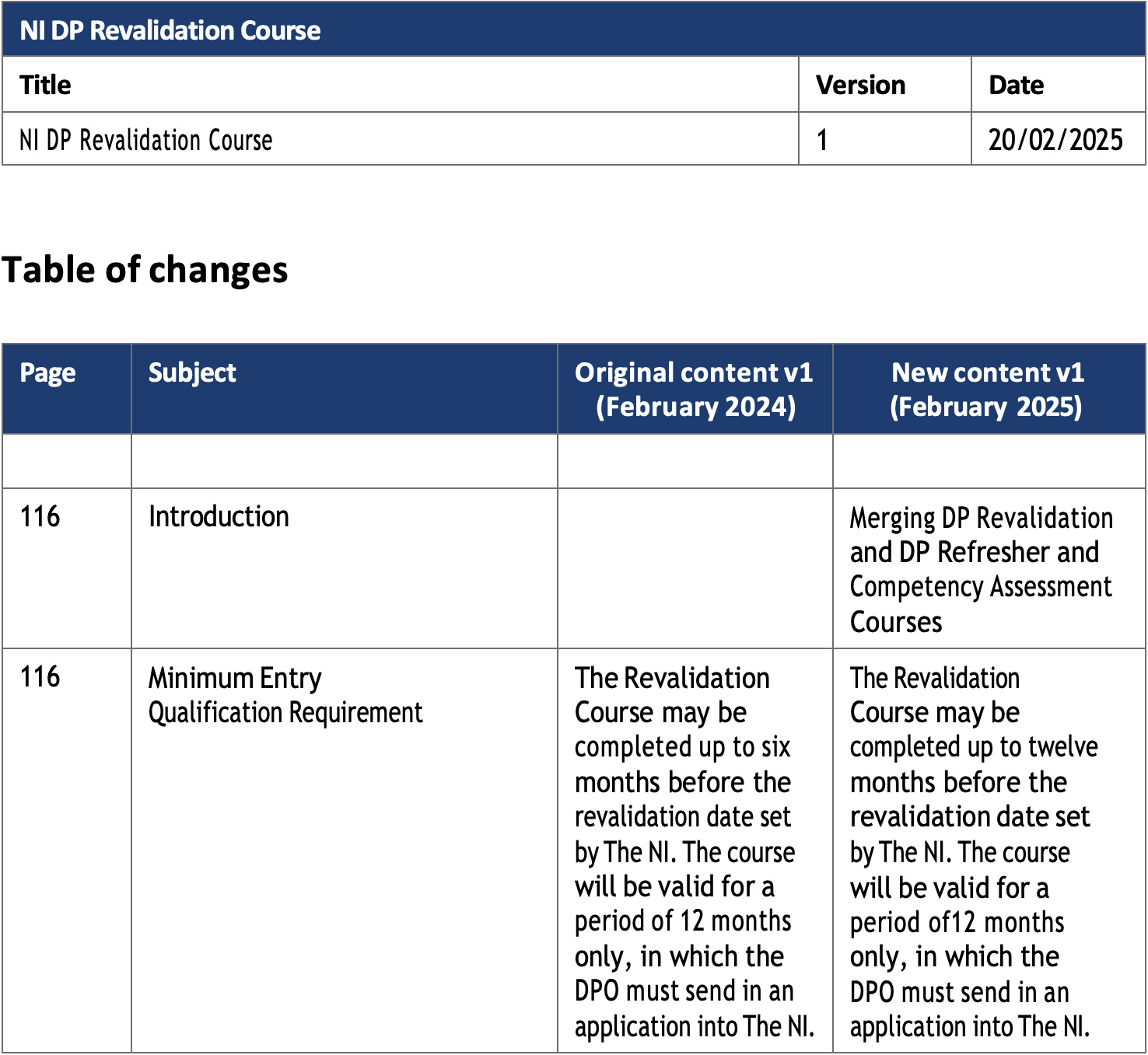
The Nautical Institute (The NI) has introduced an alternative route to revalidation through the implementation of a Revalidation Course. The requirements for the Revalidation Course are established through this document.
The contents of the DP Revalidation and the DP Refresher and Competency Assessment Courses are similar. The NI agreed to merge the course with DP Refresher and Competency
Assessment Course. The single course will be known as the DP Revalidation / DP Refresher and Competency Assessment Course.
If a training centre is approved for the Revalidation course, it is also approved for the DP Refresher and Competency Assessment course. The training centre should amend the title of the course to:
DP Revalidation / DP Refresher and Competency Assessment Course
Training centres will not need to administer two separate sets of course materials.
Revalidation and refresher course participants can attend the same course. It is the training centre’s responsibility to ensure they meet the ratio of students as per the NI Standard and issue the appropriate certificate on completion of the course.
2. Minimum Entry Qualification Requirements
The minimum entry requirement is a DPO Certificate issued by The NI. The original DPO Certificate should be presented at the DP Centre where the Revalidation Course is completed.
The Revalidation Course may be completed up to twelve months before the revalidation date set by The NI. The course will be valid for a period of 12 months only, in which the DPO must send an application to The NI.
If the participant is completing the course for the first time, there is no minimum DP sea time requirement.
If the participant is completing the course for a second or subsequent time, a minimum of 28 DP sea time days will be required to revalidate. This DP time may be completed prior to or after the Revalidation Course.
Where a participant subsequently revalidates after taking the course by completion of the full sea time requirement of 150 DP sea time days that participant can then take the Revalidation Course again without a DP sea time requirement.
Legacy and Grandfathered certificate holders will need to complete DP sea time days towards revalidation.
Please Note: Shuttle Tanker Certificate holders required to revalidate their certificates with the Revalidation Course. For information on how to revalidate a Shuttle Tanker Certificate or convert to the Offshore Scheme please see Section 6.
3. Number of Hours
A minimum of 34 hours of teaching and simulator time is required for this course which includes the time needed for the examination and assessments. The course must schedule both practical and theoretical aspects with about 50% of the time assigned to each. The course is to be delivered over five days.
4. Ratio of Students/Instructors/Equipment
The NI allows a maximum of four students per class being taught by one instructor per one Class B or A Simulator.
By exception and where justified, five or six students may be considered at the discretion of The NI’s Accreditation Team, based on the number of simulators in place, rotation of students and the use of the training methodology in place.
When two different types of simulator systems from two different manufacturers are available in a training centre, the best practice is to keep the trainee on the same simulator throughout the course.
A minimum requirement is to use an NI DP Class B Simulator to correspond with the training objectives for the Revalidation Course.
5. Delivery Method
Training will be split equally between theory and practical exercises. Theory may be used to support the practical exercises either as a briefing, a de-briefing or for demonstration purposes.
6. Course Aims
The course is intended for those who have already been issued a DPO Certificate from The NI but are unable to revalidate their DPO Certificate if they have not gained sufficient DP sea time. The overall course aim is to update the DPOs with the latest rules and regulations, position references and sensors, known DP incidents and lessons learned. At the end of the course, the student should:
6.1 Have acquired knowledge of the latest rules and regulations.
6.2 Have acquired knowledge of the latest developments within sensors and PRS.
6.3 Have acquired knowledge of the latest relevant DP incidents and why they occurred.
6.4 Be able to recognise the various alarm, warning and information messages.
6.5 Be able to carry out operational planning, risk assessment and hazard identification tasks.
6.6 Be able to set up the DP system for a particular task/operation.
6.7 Be able to decide on courses of action because of systems failure.
7. Course Objectives
The following is a list of the objectives that should be attained by the DPOs upon completion of the Revalidation Course.
By the completion of the training session or period for DP Rules and Regulations the trainee should be able to:
7.1 List the various providers of documents containing statutory requirements and guidance relating to DP operations, including:
7.1.1 IMO (including IMO MSC/Circ. 645 of 1994 and 1580 of 2017 Guidelines for Vessels with Dynamic Positioning Systems).
7.1.2 Classification society DP rules.
7.1.3 International Marine Contractors Association (IMCA).
7.1.4 Marine Technology Society (MTS).
7.1.5 IMCA and MTS guidelines for ASOG.
7.2 Explain the purpose of documentation associated with DP operations, such as DP operations manuals, Failure Modes and Effects Analysis (FMEA) and capability plots.
7.3 Describe the IMO (DP) equipment classes and their application, with reference to the IMO Guidelines for Vessels with DP Systems.
7.4 Understand the importance of reporting DP incidents knows where to find DP incident reports and knows how to report DP incidents.
By the completion of the training session or period for DP Sensors and PRS the trainee should be able to:
7.5 Describe the following position reference systems commonly associated with DP installations: Differential GNSS, hydro acoustic, INS, taut wire, Artemis, FMCW Radar and laser-based systems.
7.6 Describe the failure modes of the following position reference systems: Differential GNSS, hydro acoustic, INS, taut wire, Artemis, FMCW Radar and laser-based systems.
7.7 Describe the following sensors associated with DP installations: vertical reference sensor/unit, motion reference unit, gyro compass, wind sensor (anemometer) and draught input sensor. ASOG, TAM and CAM.
7.8 Describe the failure modes of the following sensors: vertical reference sensor/unit, motion reference unit, gyro compass, wind sensor (anemometer) and draught input sensor.
By the completion of the training session or period for DP Set-Up the trainee should be able to:
7.9 Ensure the vessel is on DP in accordance with the vessel’s class and the vessel’s operation manual; complete DP checklist for class-approved FMEA and ASOG.
7.10 Determine and set alarm and warning limits.
7.11 Evaluate most appropriate PRS for specific DP-operations.
7.12 Select the number of position reference systems required in accordance with the DP class.
7.13 Use correct thruster allocation for a specific operation and weather conditions.
7.14 Test vessel’s manoeuvring capability during prevailing weather conditions.
7.15 Determine a Safe Position and minimum distances to stabilise the vessel in DP.
7.16 Obtain information and clearance from eg installation, on issues important for the safe operation of the vessel under DP.
By the completion of the training session or period for DP Bridge Watchkeeping the trainee should be able to:
7.17 Demonstrate a continuous awareness of the vessel’s status, operation and impact of operating under DP.
7.18 Recognise the importance of maintaining lookout and awareness of the external situation including weather when controlling a vessel close to installations or other objects.
7.19 Recognise situations in which to call the Master to the bridge.
7.20 Log and report DP station keeping events.
7.21 Monitor position reference systems, sensors and signal quality in anticipation of the possibility of failure causing instant or violent reactions from main engines or thrusters.
7.22 Monitor power output and thrust.
7.23 Monitor thruster efficiency for station keeping at different headings and draughts, which may affect DP Class.
7.24 Recognise DP-related changes in vessel systems and technical equipment, which may affect DP Class.
7.25 Recognise technical and operational issues that may limit or stop DP operations.
7.26 Monitor that the DP operating parameters of continuous operating power are not exceeded.
By the completion of the training session or period for Position Keeping the trainee should be able to:
7.27 Recognise alarms related to the incorrect operation of the DP-system and maintaining position.
7.28 Acknowledge alarms within time constraints.
7.29 Discuss alarms with relevant departments.
7.30 Evaluate the possible consequences of each alarm and possibility to continue the operation.
7.31 Analyse the consequence analysis alarm.
7.32 Interpret visual indicators, indicating conditions which may result in malfunction of DP.
7.33 Monitor movement of the vessel and changes in the position and heading, in keeping with safe excursion limits deending upon the ongoing task/operations.
7.34 Monitor movement of the object/installation/ target.
7.35 Monitor by various means, changes in distance/heading between object and own vessel (if applicable).
7.36 Recognise limitations of vessel movement when having equipment or divers deployed.
By the completion of the training session or period for Environmental Conditions the trainee should be able to:
7.37 Recognise changes in environmental conditions.
7.38 Recognise when environmental conditions become critical with reference to station keeping.
7.39 Recognise increased importance of situational awareness when operating close to floating objects.
By the completion of the training session or period for Alarms and Indicators the trainee should be able to:
7.40 Identify the procedures to follow for DP and non-DP alarms.
7.41 Identify the procedures for when to change DP Alert status (eg from green to amber/yellow, blue/white or red).
By the completion of the training session or period for Change of DP Watch the trainee should be able to:
7.42 Prepare a hand-over checklist.
7.43 Transfer vessel’s status and DP-details when handing over the watch (where not covered by the watchkeeping checklist).
7.44 Provide an update on the ongoing operation and planned operational activities.
7.45 Review a hand-over checklist.
7.46 Verify vessel’s position or movement and status.
7.47 Interpret all necessary information of vessel and operation.
7.48 Take-over/hand over DP watch in a formal and clear manner.
7.49 Determine the DP status and recent occurrences that may have an effect on the DP operation during the watch.
By the completion of the training session or period for Normal Completion of a DP Operation the trainee should be able to:
7.50 Identify safe departure route and best vessel heading for departure.
7.51 Recognise external dangers prior to departure.
7.52 Identify an Emergency Escape route, which may or may not be the same as the normal departure route.
7.53 Retrieve Position Reference System Equipment from eg the installation or seabed (if applicable and as part of a Departure checklist).
7.54 Demonstrate moving to a safe position in appropriate steps.
7.55 Recover/retract deployed equipment (if applicable).
By the completion of the training session or period for Operating in Joystick Mode (DP Joystick) the trainee should be able to:
7.56 Stop the vessel at a pre-determined position.
7.57 Determine the need to stop the vessel completely before switching to DP control (system specific).
7.58 Operate the DP joystick to maintain position and/or heading in a controlled and safe manner.
7.59 Operate the DP joystick to change position and/or heading in a controlled and safe manner.
7.60 Demonstrate DP joystick station keeping of the vessel under prevailing weather conditions.
By the completion of the training session or period for Emergency Situation the trainee should be able to:
7.61 Move the vessel to a safe position in a safe and controlled manner.
7.62 Demonstrate an awareness of the Emergency Escape Route.
By the completion of the training session or period for Emergency Performance/Response the student must demonstrate at least two of the following:
7.63 Demonstrate actions in case of unstable Position Reference System(s).
7.64 Demonstrate actions when losing Position Reference System(s).
7.65 Demonstrate actions if Position Reference System(s) suddenly indicate significant changes in position/range/bearing data.
7.66 Demonstrate actions in case of error in wind input.
7.67 Demonstrate actions in case of a DP drive-off.
7.68 Demonstrate actions in case of a DP drift-off.
7.60 Demonstrate actions in case of a DP force-off.
7.70 Demonstrate actions in case of one thruster run-off.
7.71 Demonstrate actions in case of error in sensor input.
7.72 Demonstrate the proper sequence of actions if experiencing an onboard emergency which may influence DP-control during DP operations.
7.73 Explain actions when losing all DP control functions.
7.74 Explain the proper sequence of actions if colliding or about to collide with an installation, nearby objects or vessels during DP-operations.
8. Course Assessment
The assessment for the Revalidation Course includes a theoretical (NI online) exam and a practical assessment. Each component must be completed successfully. There is no specific order in which they must be completed. After the course is completed, an entry will be made in the appropriate logbook.
9. Online Assessment
In order to be awarded a certificate of completion for the Revalidation Course, the DPO must pass an online assessment at the training centre.
The exam is composed of multiple-choice questions that have already been developed from the Induction Course and the Simulator Course. The online assessment will consist of 30 questions and shall be completed in one hour with a pass mark of 70%.
Students who fail the first attempt are allowed to have another two attempts within six months of the first attempt; however, the second attempt must be undertaken within 96 hours of the first
attempt. If the student fails these three attempts, the student is required to repeat the Revalidation Course and undertake the assessment again.
10. Practical Assessment
The practical assessment must be done individually. The practical assessment shall include the following items which the student must pass to be awarded a certificate of completion for the Revalidation Course:
i. Complete a DP Checklist.
ii. Set up the vessel on DP.
iii. Move the vessel from set-up position to a worksite.
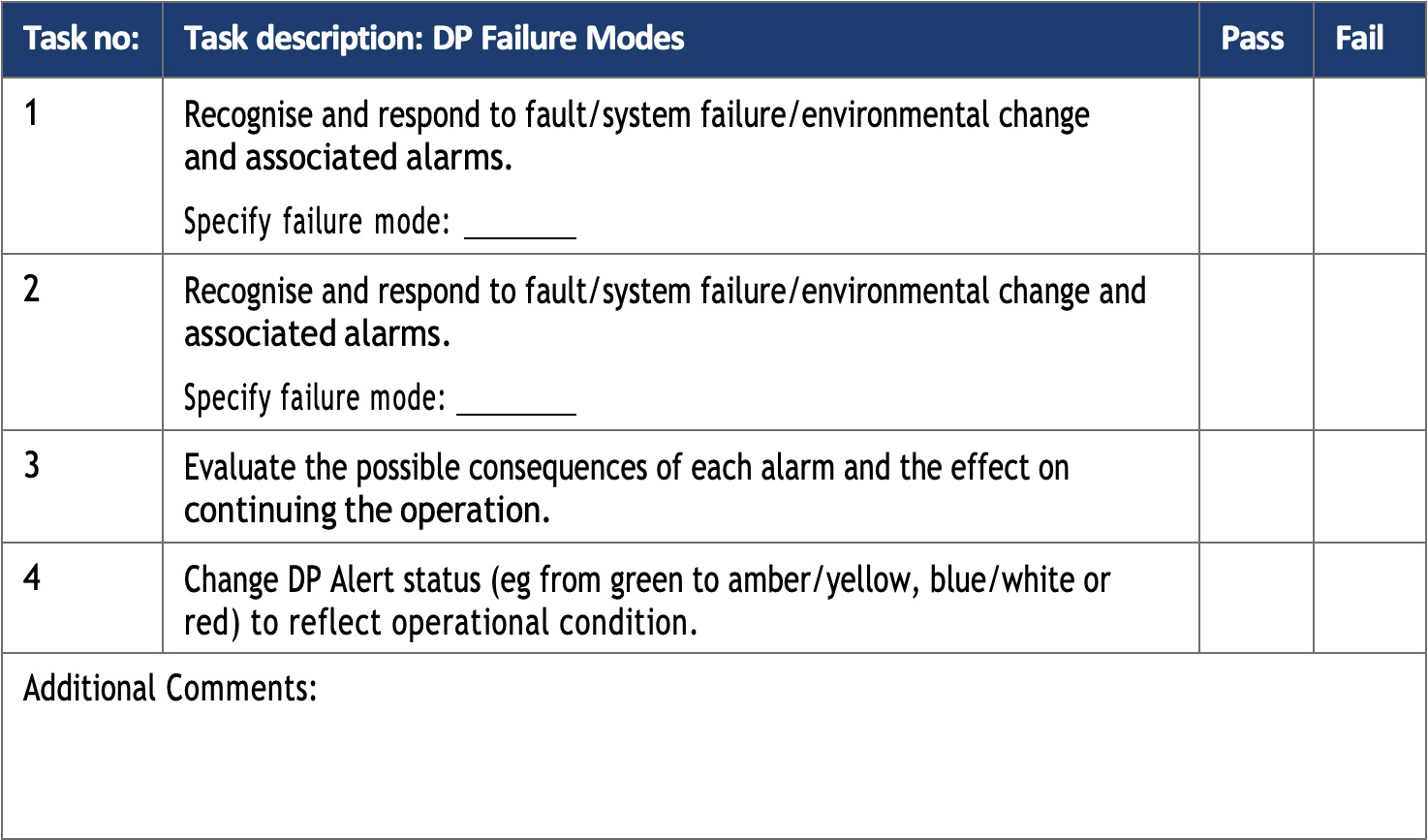
iv. Deal with a system/sensor/thruster failure or environmental change (at least two).
The training centres must develop their own practical exams based upon the course objectives listed above.
The student must pass all the four items listed above. The training centre is responsible for ensuring that the assessment is carried out in a professional manner and that the student is assessed with thoroughness in line with the standards of The NI.
10.1 Practical Assessment Guidance for Training Centres
Below you will find guidance for the development and the examination process for the practical assessment for the Revalidation Course.
10.1.1 General Guidance
i. Duration of practical assessment: Between one and two hours.
ii. Pass or fail criteria: This item will be the most challenging. The student’s performance is evaluated by the instructor and in an ideal world; such an evaluation should be objective. Although the student must pass all items, it could be that some items are performed as a “pass” whilst other items could be defined as a “fail”. It will be the overall performance of the student that determines if the practical assessment is a pass or fail. For example, failing to identify a small position deviation from one of the PRS inputs would not necessarily mean that the student fails, but failing to identify that the vessel has lost DP Class and that the vessel is now operating without redundancy, would. Depending on the nature of the fail it is up to the DP Training Centre to determine if the student should be allowed to retake the practical assessment. If the fail is related to safety-critical items, as determined by the Training Centre, the student should not be allowed to retake theassessment, but should retake the course. Reason(s) for failing the student should be given to the student in writing.
iii. Students who fail at the first attempt and are allowed to retake the practical assessment, can do this only once. The second attempt must be agreed with the DP Training Centre and carried out at the centre’s convenience.
10.1.2 Practical Assessment Scenario Guidance
i. Exam Scenario
After passing the written exam, each student will randomly draw a number linked to the scenario they will be examined on.
Scenarios are to be based on the course training objectives. All scenarios should be equal in complexity.
Each scenario will end with the vessel located at a worksite in close proximity to a platform/ structure, such as a fixed platform, a semi-submersible rig or another vessel.
Based on the task to be performed by the vessel at the worksite, there should be at least two possible locations where the vessel can be positioned to complete the task (one drift- on and one drift-off ). The student will be expected to choose the better of the two. The following are two examples of scenarios that could be used. The vessel might be required to do an ROV inspection of a platform where there is sufficient tether available to work at both locations. The vessel might be required to position under a crane for cargo operations where there are two cranes available (one upwind and one downwind).
Each centre shall develop its own practical exam scenarios based on the DP equipment fitted and the simulated platforms/structures it has available.
The centre will have 10 to 15 scenarios available for exam purposes. This will permit all students to have a random selection. Multiple scenarios can be created by using the same structure/vessel/task and simply changing the environmental conditions.
Time for planning the practical assessment shall be allocated to the student. 20 minutes before the exam, each student will be presented with their scenario. This will permit the student time to develop a plan as to how they will proceed. One student can carry out the exam while the other is planning; this will save time during the exam process.
Prior to starting the exam, the student will be asked to state the planned vessel position and heading when at the final worksite. The student will also state the direction from which (bearing) they will approach the worksite and the desired heading at exercise start. All students will start at the same distance from the worksite. Before starting the exam, the instructor will place the vessel (exercise start position) on the bearing and heading specified by the student.
ii. Checklist/Set up on DP
The DP checklist below is a sample only. It indicates the extent to which checks are to be conducted and the content required. Each centre will develop its own checklist based on parameters including DP equipment fitted, vessel power plant, thrusters and reference systems fitted. The flow and layout of the checklist would also be as required by the individual centre. The centre may wish to increase the content of the checklist and is free to do so.
There are items that may be omitted. For example, the sample below has two means of determining vessel capability after worse case failure (DP capability plot and deselecting thrusters). Only one means would be required.
The sample below would take approximately 20 to 25 minutes for someone who is familiar with the DP system/vessel. Ability of the individual student will vary. The students are to use the same checklist for the exam as for course exercises. They will also be informed that the checklist is part of the exam.
Some items on the checklist will require the vessel to be set up on DP. Therefore at some point during completion of the checklist, the student will place the vessel in DP mode.
Based on the results of the checklist, the student can request changes to generator, power, switchboard or thruster configurations. The student may also alter the planned approach route and final worksite heading/position, based on the results of the checklist.
iii. Approach to Worksite
After completing the checklist and set up on DP, the student will move the vessel to the worksite. The speeds and methods used by the individual student will vary. If the vessel is outside the 500m zone at the start, this could take considerable time. As a benchmark, a single move of 500m at 0.25m/sec would require 33 minutes. The actual moves during the exam will be undertaken in increments and at varying speeds, making it difficult to indicate an actual time for this item. To reduce time requirements, for exam purposes, the exam may start at a distance of 250 to 300m from the worksite.
iv. At the Worksite
The actual vessel task at the worksite can be as determined by the training centre. This might be diving operations, ROV operations, cargo operations or similar.
The type of practical assessment (eg DP operation) should have been reflected or revised during the Revalidation Course.
The last stage of the exam will introduce a DP fault/failure or environmental change for the student to deal with.
This specification identifies possible faults and indicates that at least two must be utilised. Both can be introduced after the vessel is on location at the worksite but one must be introduced at this stage. The other can be introduced at any stage in the exam, after the vessel is set up on DP. Considering the above, the exact timing of fault injection and the faults to be used, with a particular scenario, will be determined by the training centre.
v. Exam Time Required
If the exam starts at a distance of 250m from the worksite, the total time required for the practical exam should be one to two hours per student. The extent to which the simulated DP operation progresses (after positioning at the worksite) is determined by the training centre.
The first student will require more time as they would require time to plan (20 minutes). Subsequent students would get the same amount of planning time but would be doing so while another is being examined.
10.1.3 Practical Assessment Mark Sheet Example
Each Training Centre must ensure that the training objectives are assessed in a proper manner. It might be difficult to assess each student on all training objectives. Therefore, it would be recommended that a selection of training objectives should be covered during the assessment.
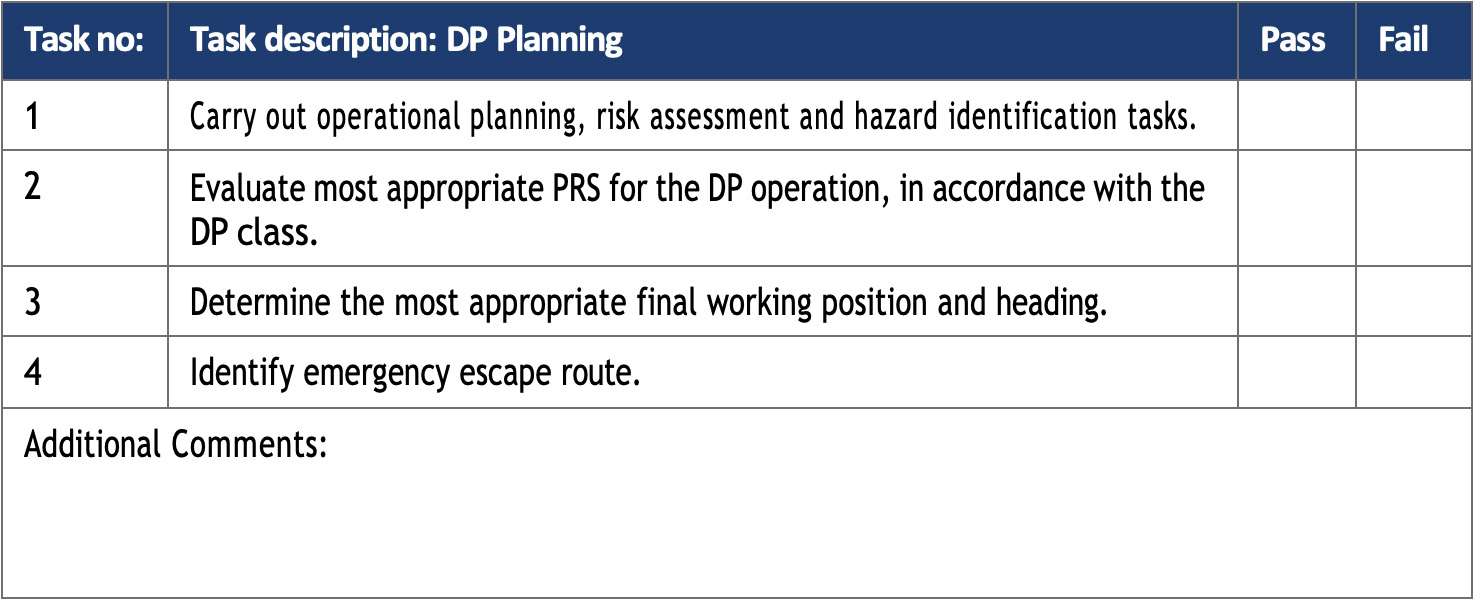
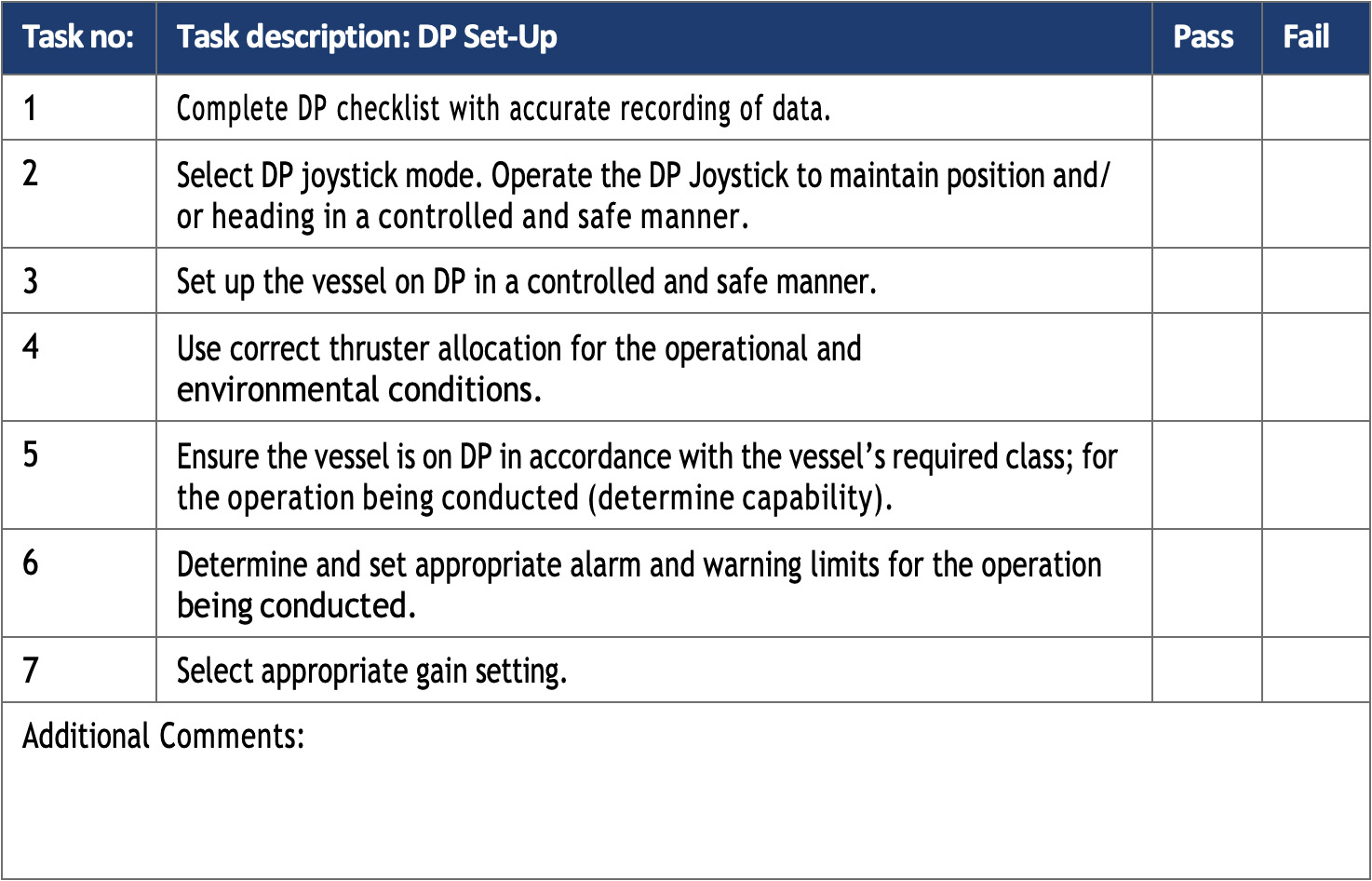
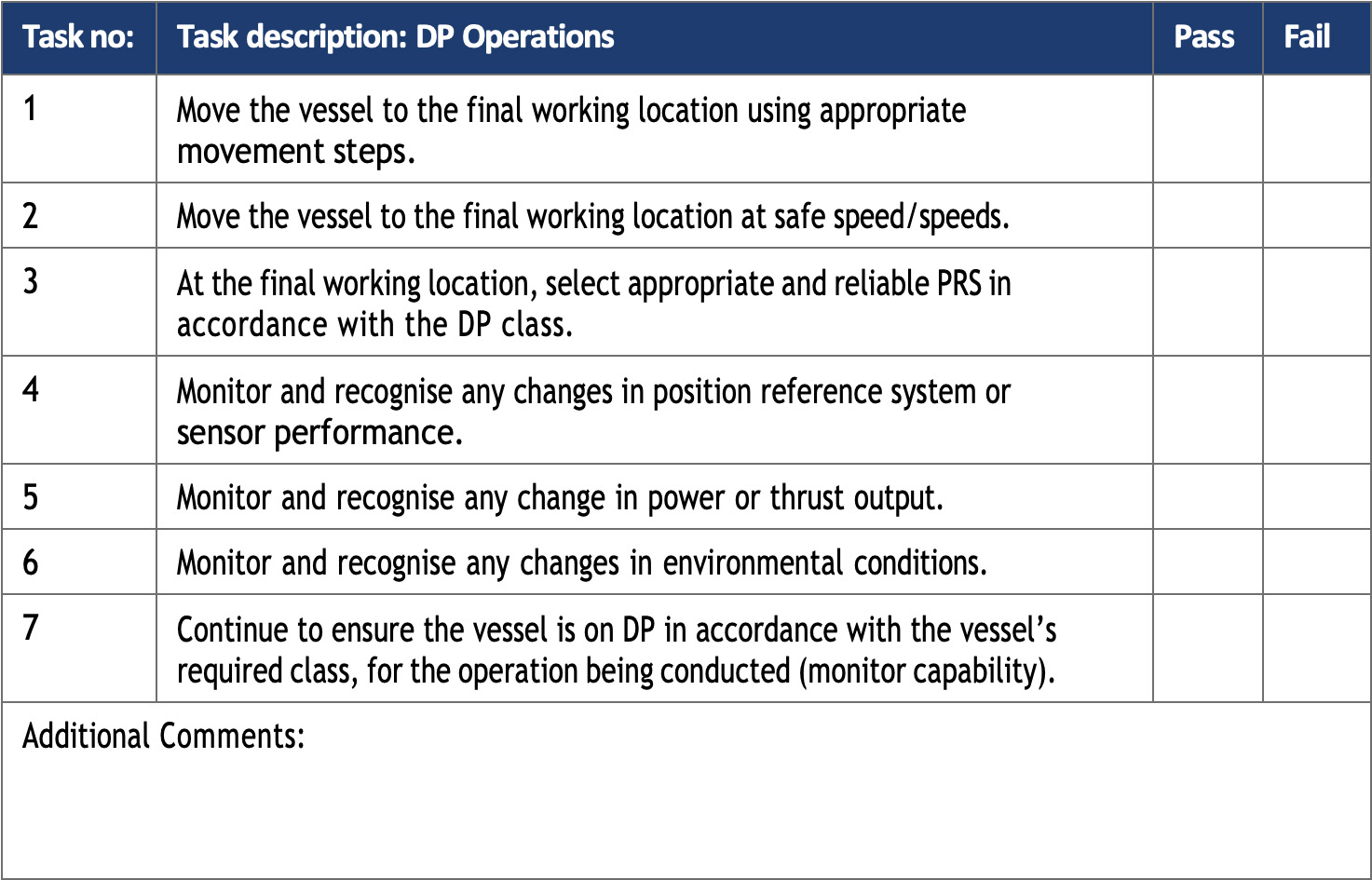
The tables on the following page show the items to be evaluated during the practical assessment. Exercises are to be structured to enable evaluation for the items listed below.
11. Mark Sheet Exam Number 1
Practical Assessment DP Revalidation Course

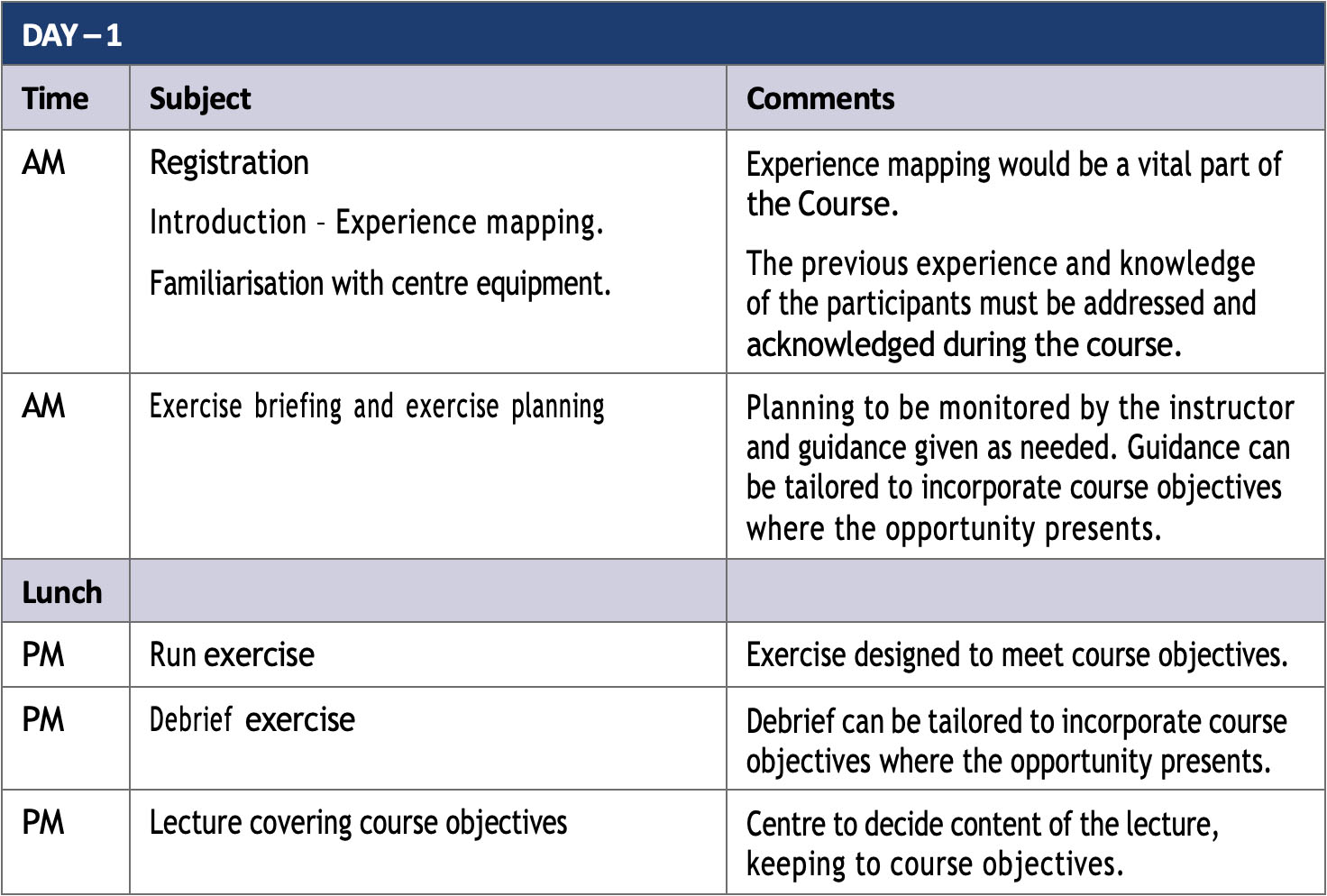
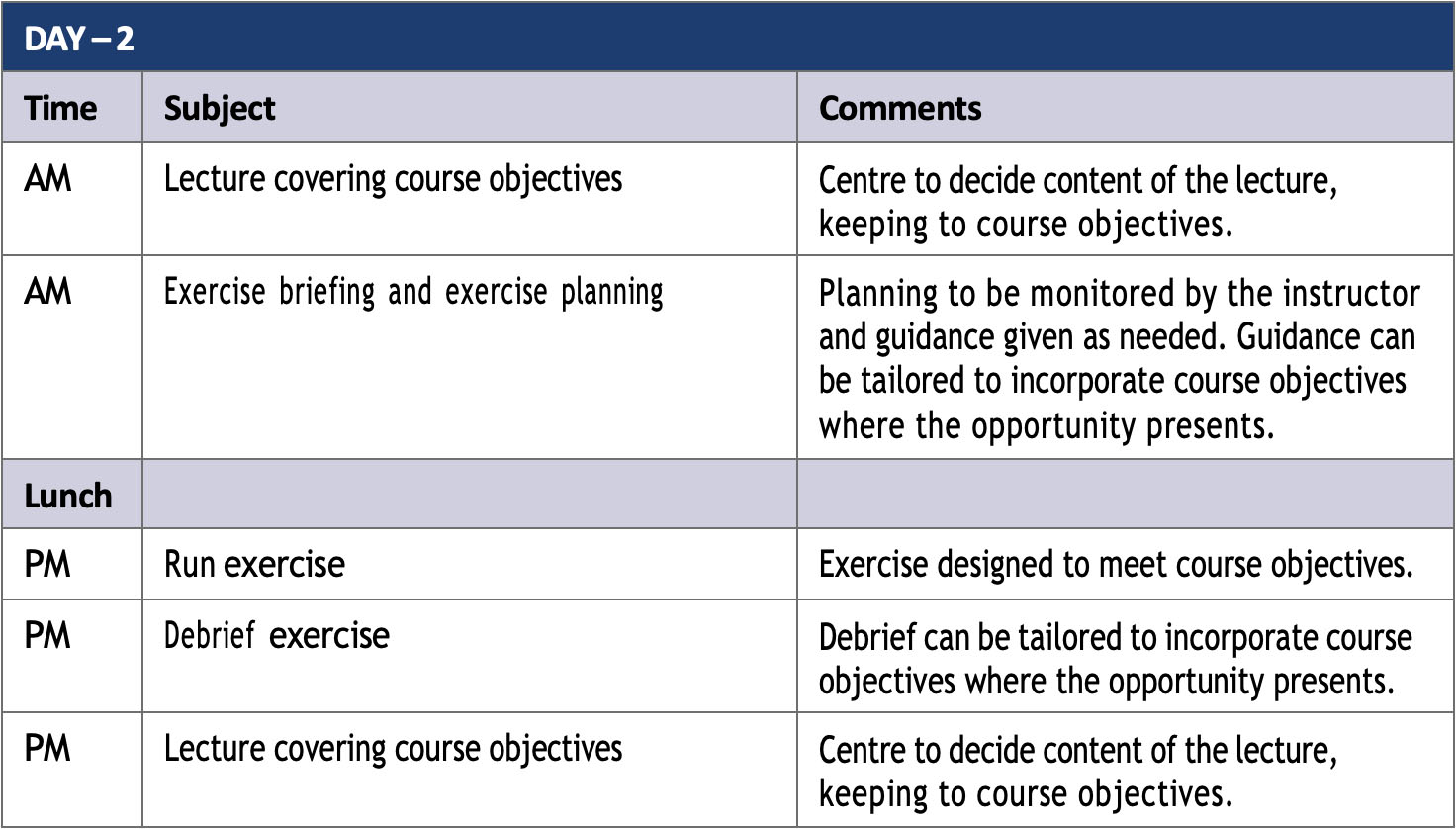
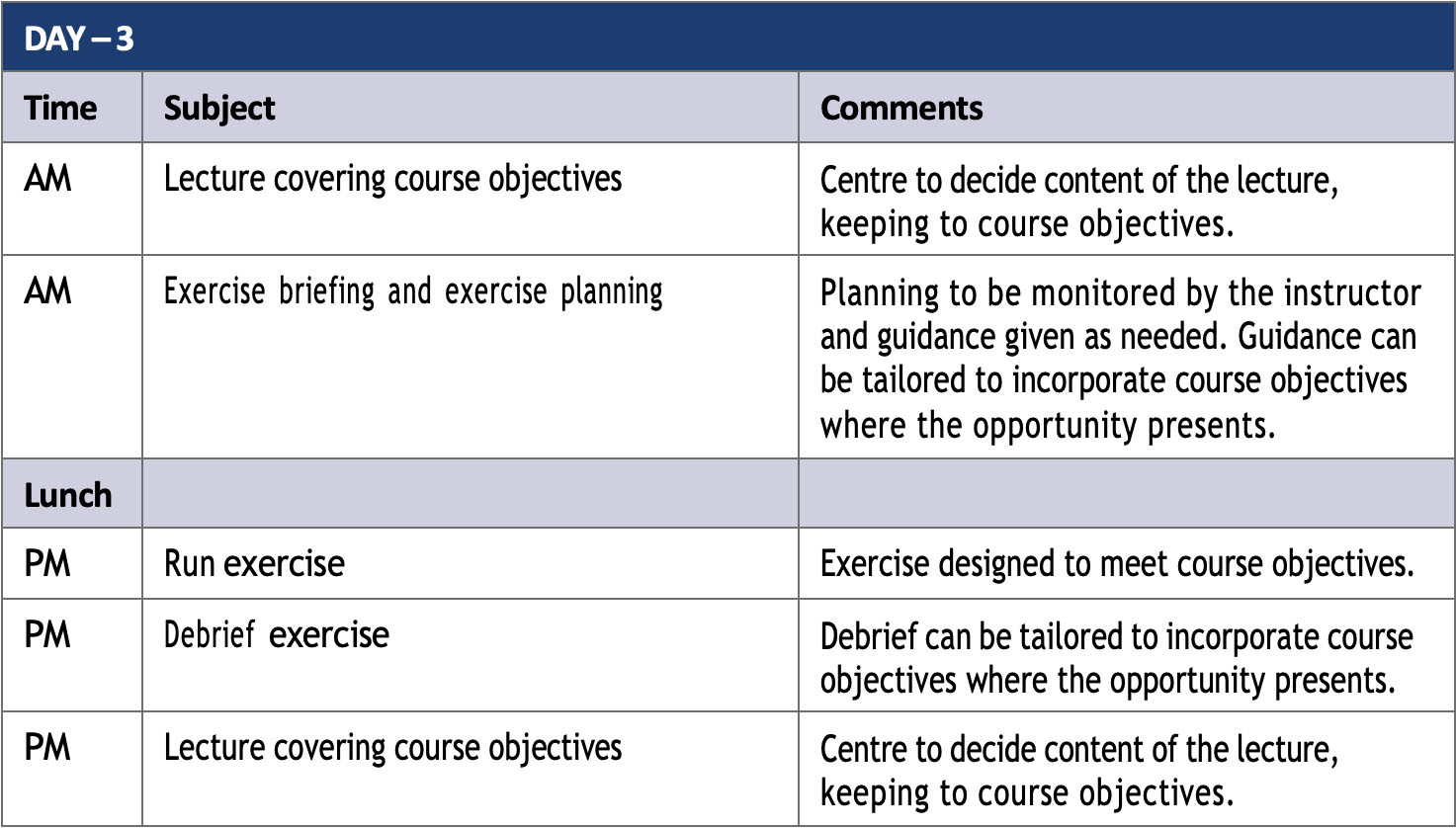
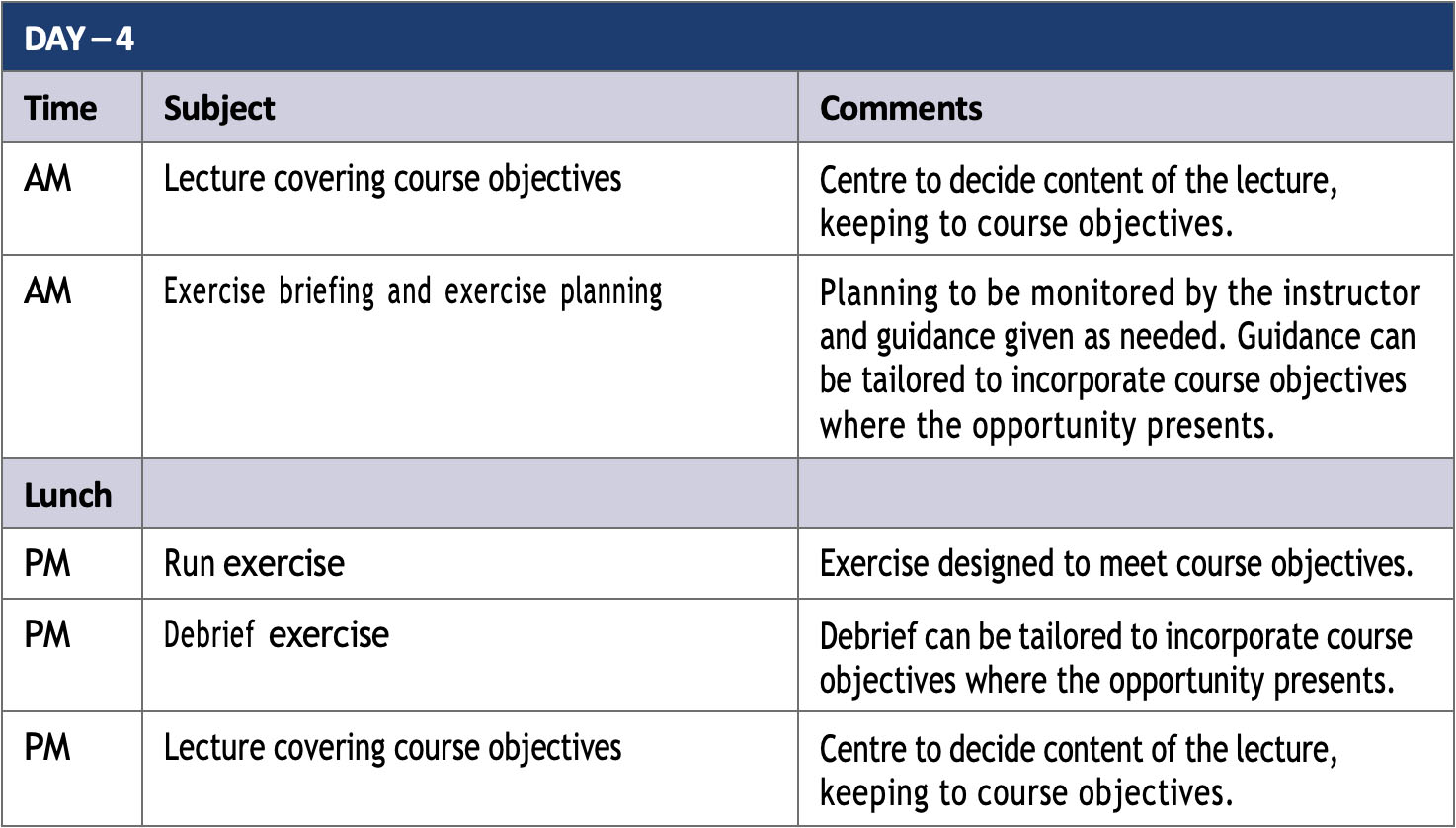
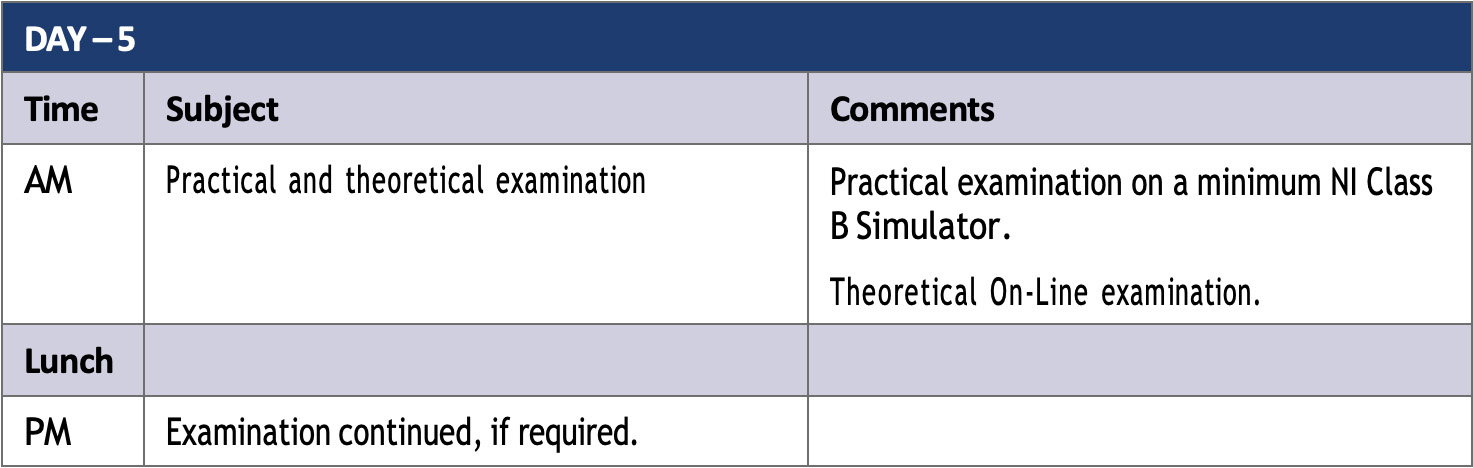
12. Revalidation Course Timetable
Below is a suggested timetable, which can be used for the Revalidation Course.
13. DP Checklist
Below is a suggested DP Checklist, which can be used for the Revalidation Course.
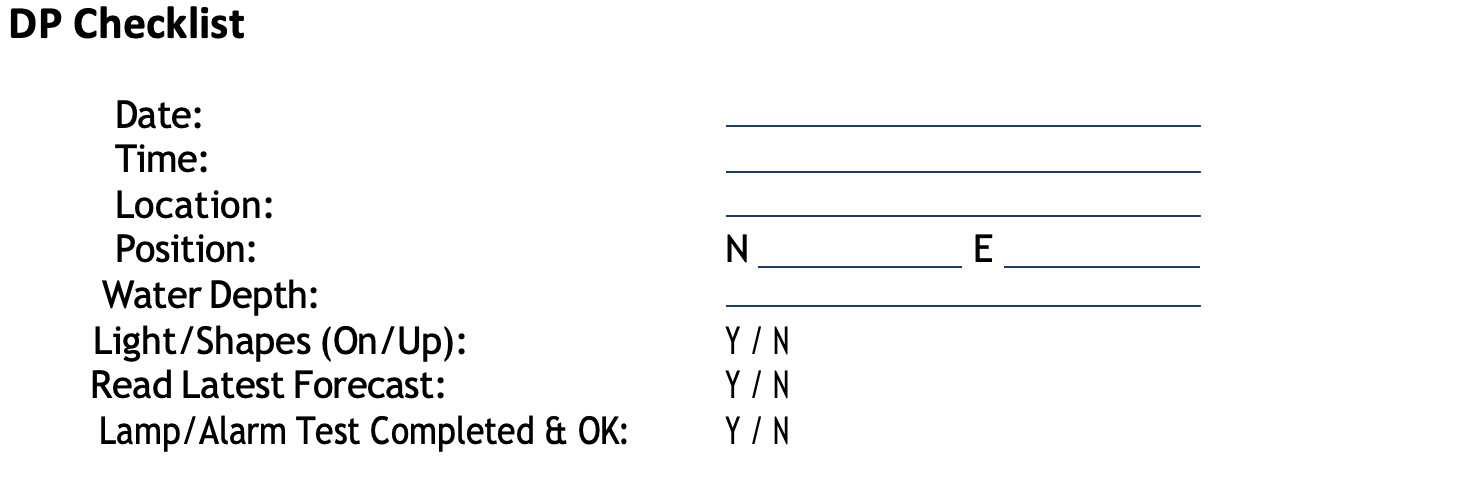
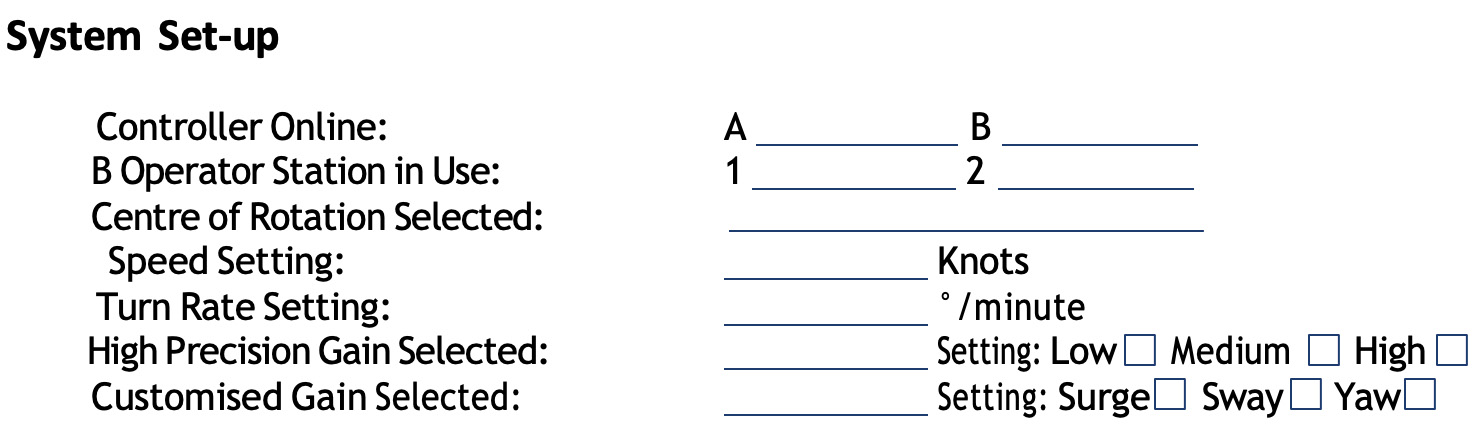

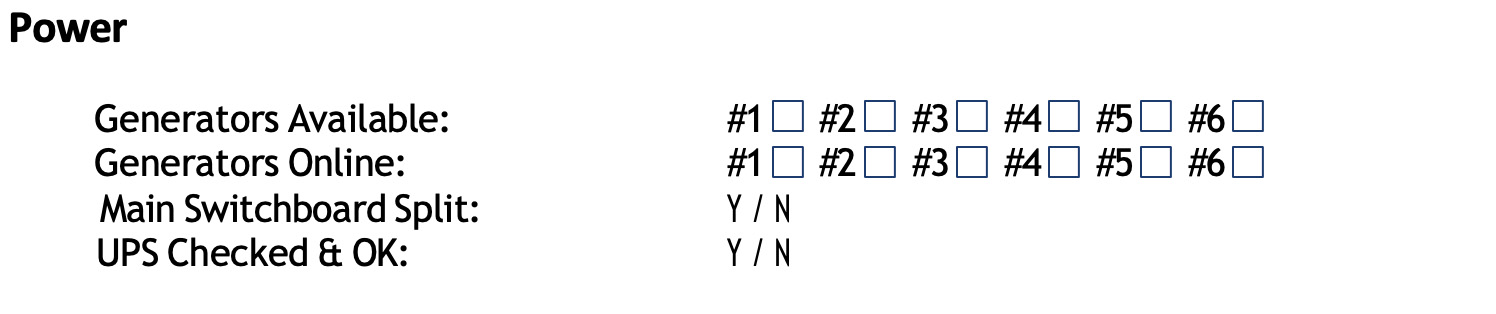
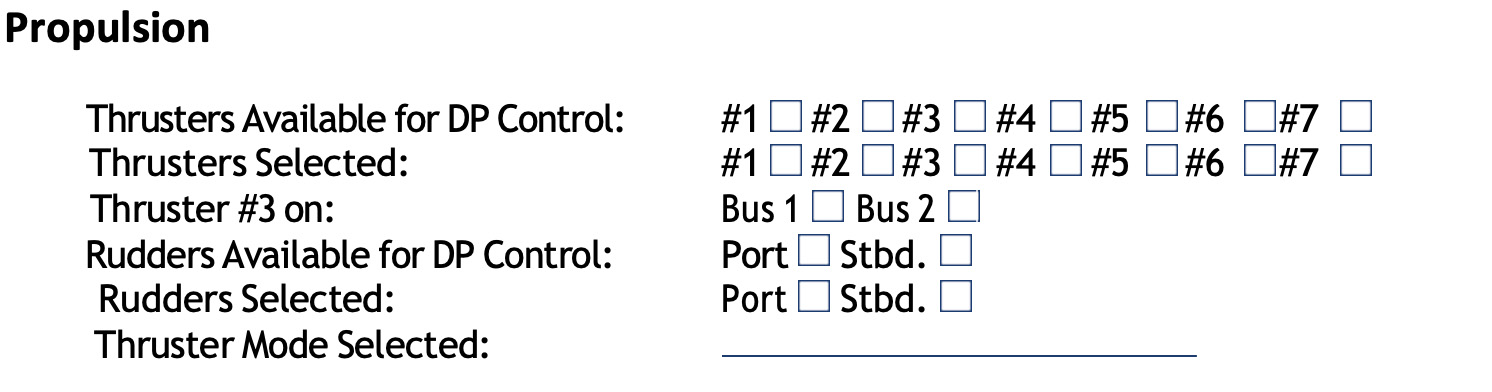
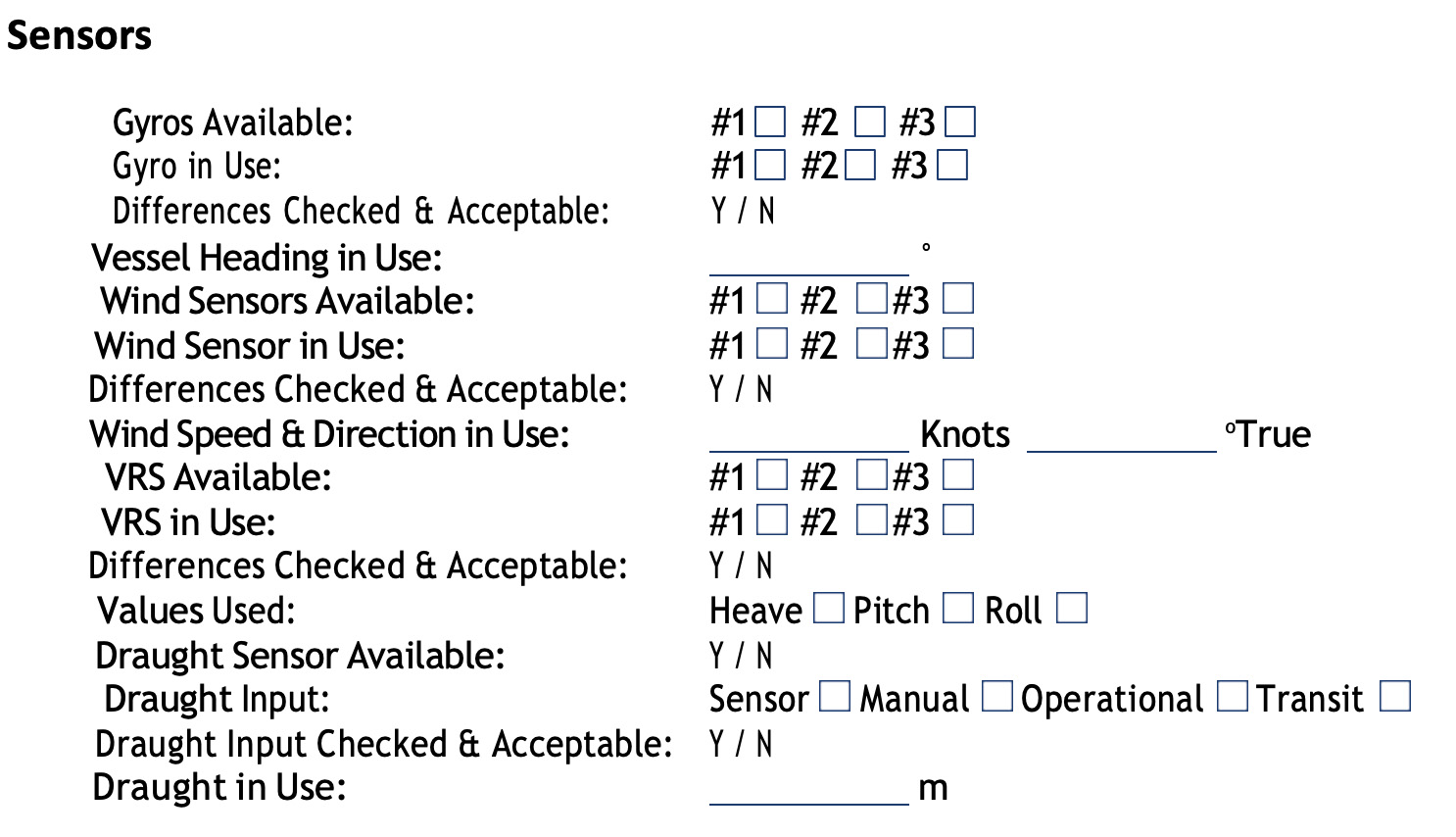
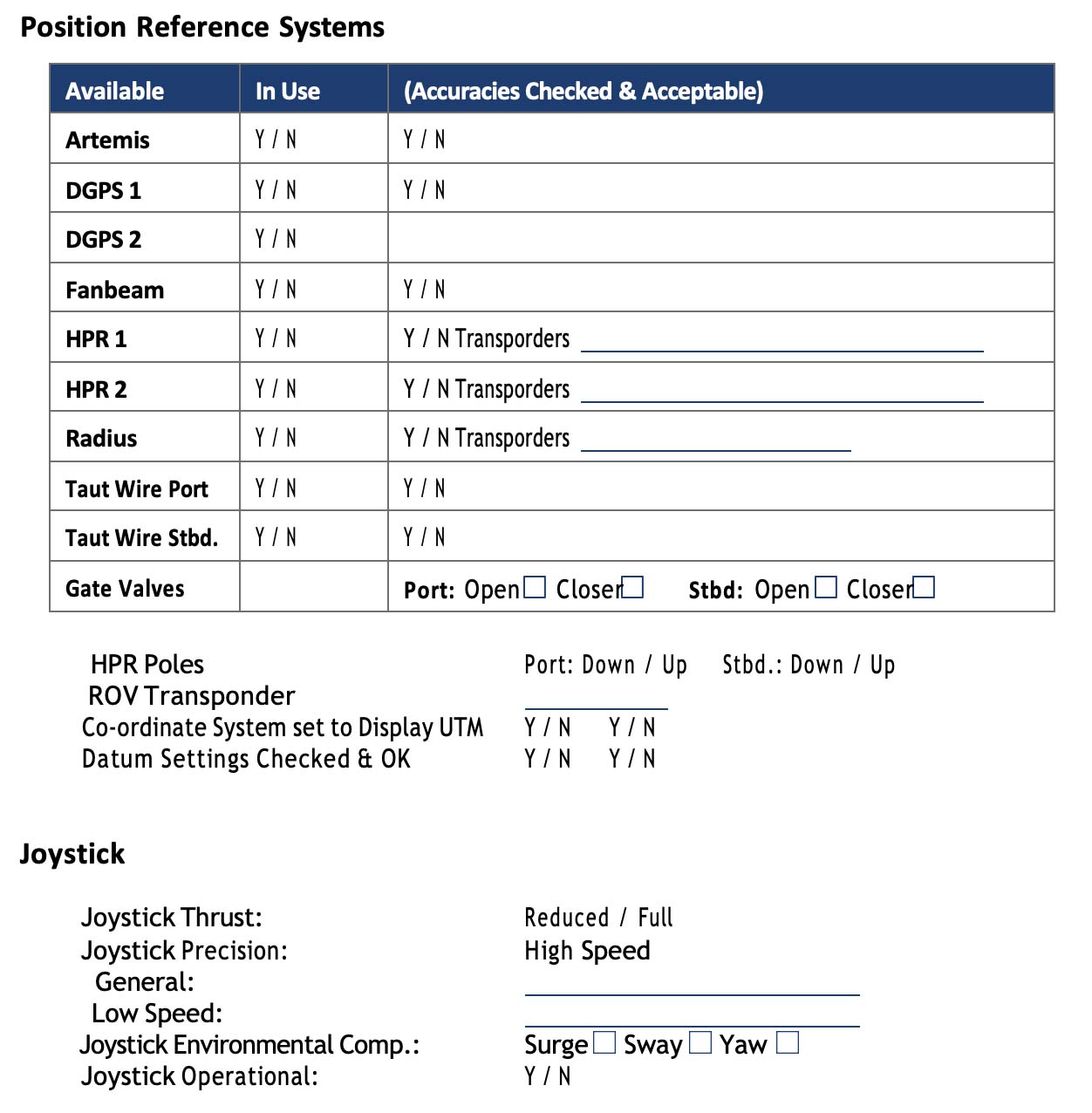
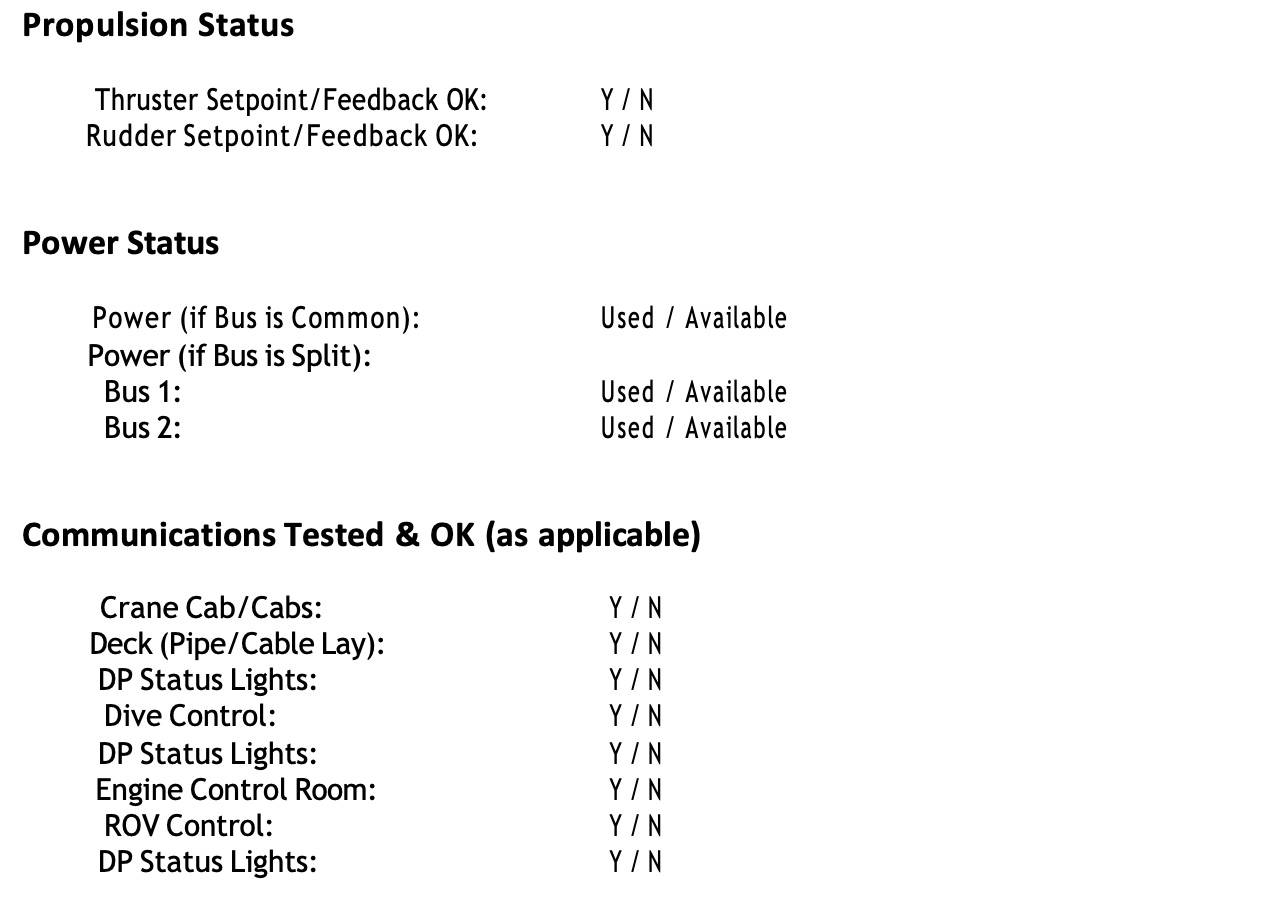
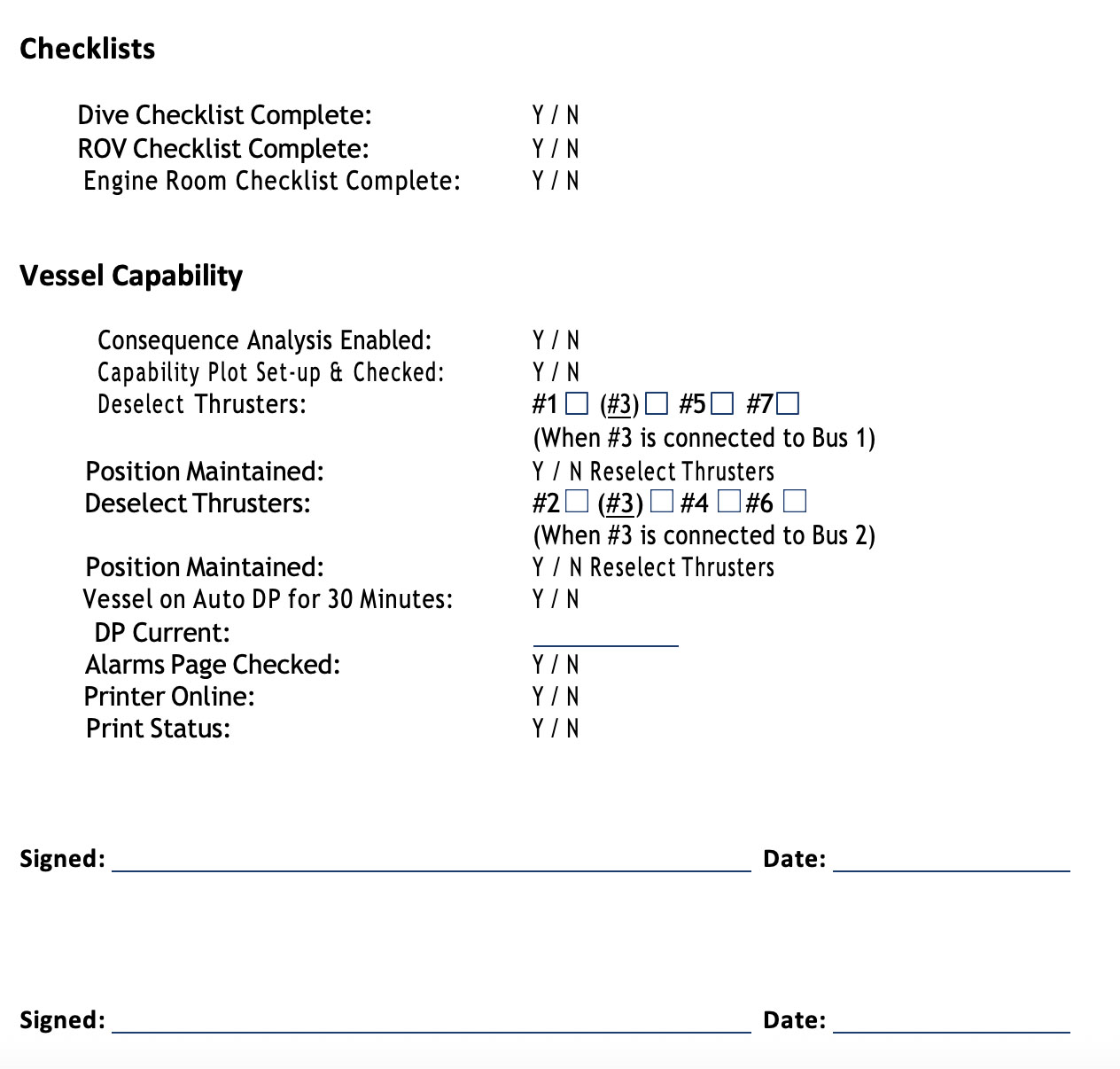
Table of Contents
- 1. Introduction
- 2. Minimum Entry Qualification Requirements
- 3. Number of Hours
- 4. Ratio of Students/Instructors/Equipment
- 5. Delivery Method
- 6. Course Aims
- 7. Course Objectives
- 8. Course Assessment
- 9. Online Assessment
- 10. Practical Assessment
- 11. Mark Sheet Exam Number 1
- 12. Revalidation Course Timetable
- 13. DP Checklist
